

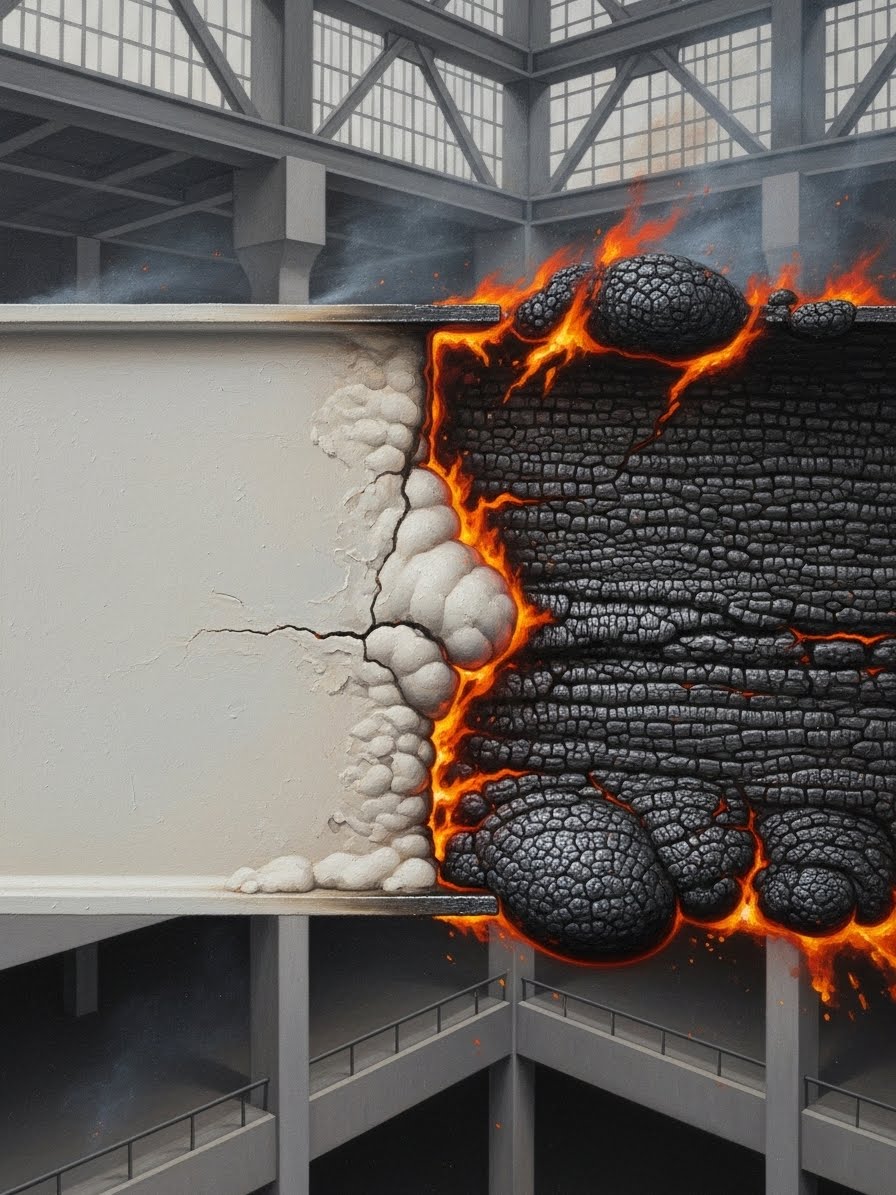
Fire safety has always been critical in industrial environments—but in 2026, it’s more important than ever. With evolving building codes, rising insurance requirements, and increased awareness of life-safety risks, industrial fireproofing has become a top priority for facility owners, engineers, and developers across North America.
From warehouses and manufacturing plants to data centres and agricultural buildings, fireproofing technologies and strategies are advancing rapidly. Let’s take a closer look at the key industrial fireproofing trends shaping 2026 and what they mean for your building.
🏭 Why Industrial Fireproofing Matters More in 2026
Industrial buildings face unique fire risks due to:
- Large open spaces
- High fuel loads (equipment, inventory, packaging)
- Electrical systems and machinery
- Steel structural elements vulnerable to heat
In recent years, insurers and regulators have placed greater emphasis on passive fire protection—systems designed to slow the spread of fire and protect structural integrity long enough for occupants to evacuate and first responders to act.
According to the National Fire Protection Association (NFPA), fireproofing and fire-resistive construction play a crucial role in reducing catastrophic loss.
🔗 https://www.nfpa.org
🧯 Trend #1: Increased Focus on Passive Fire Protection (PFP)
🔒 What Is Passive Fire Protection?
Passive fire protection refers to materials and systems that contain or slow fire without activation, unlike sprinklers or alarms.
Examples include:
- Fireproofing spray coatings
- Intumescent paints
- Fire-rated insulation systems
- Fire-resistant structural protection
In 2026, building owners are investing more in PFP to meet stricter codes and improve overall risk profiles.
🔗 Learn more from the International Fire Protection Magazine:
https://ifpmag.com
🧱 Trend #2: Spray-Applied Fireproofing Remains the Industry Standard
Spray-applied fireproofing continues to dominate industrial applications in 2026 due to its cost-effectiveness, coverage efficiency, and versatility.
✅ Why Spray-Applied Fireproofing Is Trending:
- Conforms to complex steel shapes
- Fast installation for large facilities
- Excellent fire-resistance ratings
- Compatible with warehouses, plants, and gymnasiums
These materials protect steel from reaching critical failure temperatures during a fire, helping maintain structural stability.
🔗 Technical guidance available from Underwriters Laboratories (UL):
https://www.ul.com
🔥 Trend #3: Higher Fire-Resistance Ratings for Steel Structures
Steel loses significant strength at temperatures above 593°C (1100°F). As a result, fireproofing structural steel has become non-negotiable in many jurisdictions.
🏗️ What’s New in 2026:
- Longer required fire-resistance durations (2–3 hours)
- Expanded fireproofing requirements in industrial retrofits
- Greater scrutiny during inspections
Building codes increasingly require fireproofing to comply with standards set by the National Building Code of Canada (NBC) and ASTM fire-testing methods.
🔗 National Building Code of Canada:
https://nrc-cnrc.gc.ca/eng/solutions/collaborations/ongoing/nbc.html
🧪 Trend #4: Improved Fireproofing Materials & Formulations
Modern fireproofing products in 2026 are more advanced than ever.
🌱 Key Material Advancements:
- Improved adhesion and durability
- Reduced dust and overspray
- Enhanced impact resistance
- Low-VOC and environmentally conscious formulations
These innovations make fireproofing safer for installers, more durable for building owners, and easier to maintain long-term.
🔗 Learn more about low-VOC construction materials from Health Canada:
https://www.canada.ca/en/health-canada/services/air-quality/indoor-air-contaminants.html
🏢 Trend #5: Fireproofing Beyond Factories — More Building Types Covered
Industrial fireproofing is no longer limited to manufacturing plants.
🏬 Buildings Commonly Fireproofed in 2026:
- Warehouses & distribution centres
- Cold storage facilities
- Agricultural processing buildings
- Gymnasiums & recreation centres
- Data centres & utility buildings
- Parking garages
As industrial uses diversify, fireproofing strategies are being adapted to meet new functional and code requirements.
🧾 Trend #6: Insurance-Driven Fireproofing Upgrades
Insurance companies are playing a major role in fireproofing decisions in 2026.
💼 What Insurers Are Demanding:
- Verified fire-resistance ratings
- Documentation of compliant fireproofing systems
- Ongoing maintenance and inspection records
Buildings with certified fireproofing systems often benefit from:
- Lower premiums
- Reduced deductibles
- Improved insurability
🔗 Insurance risk guidance:
https://www.ibc.ca
🛠️ Trend #7: Fireproofing as Part of Retrofit Projects
Retrofitting aging industrial buildings is a massive trend in 2026, especially as supply chains expand and older structures are repurposed.
🔄 Retrofit Fireproofing Benefits:
- Brings older buildings up to modern codes
- Improves safety without major reconstruction
- Extends the usable life of existing facilities
- Supports adaptive reuse projects
Spray-applied fireproofing is particularly effective in retrofit scenarios due to its minimal structural disruption.
⚙️ Trend #8: Integration with Insulation & Energy Efficiency
Fireproofing is increasingly installed alongside industrial insulation upgrades, creating multi-performance building envelopes.
🔥 + ❄️ Dual-Purpose Systems:
- Fire resistance + thermal control
- Improved comfort for workers
- Reduced energy loss
- Better moisture management
This holistic approach aligns with modern facility management goals focused on safety, efficiency, and sustainability.
📋 Trend #9: Stricter Inspections & Compliance Tracking
In 2026, fireproofing inspections are more detailed and better documented.
🔍 What Inspectors Look For:
- Proper thickness and coverage
- Adherence to tested assemblies
- No damage or delamination
- Compliance with approved fire designs
Digital documentation and photo records are increasingly used to verify compliance during audits and insurance reviews.
🌍 Trend #10: Sustainability & Lifecycle Performance
Sustainability continues to influence fireproofing decisions.
♻️ Long-Term Value:
- Durable fireproofing reduces material waste
- Less frequent repairs and replacements
- Improved building lifecycle performance
Fireproofing that lasts decades aligns with ESG goals and long-term asset management strategies.
🧠 Choosing the Right Fireproofing Partner in 2026
With codes tightening and expectations rising, professional installation is critical. Fireproofing must be applied correctly to perform as tested and approved.
A qualified contractor will:
- Understand local building codes
- Use certified fireproofing systems
- Provide documentation and inspections
- Coordinate with engineers and inspectors
🔚 Final Thoughts: Fireproofing Is a Strategic Investment in 2026
Industrial fireproofing in 2026 is no longer just about code compliance—it’s about risk management, asset protection, and long-term performance.
Whether you’re constructing a new industrial facility or upgrading an existing one, modern fireproofing solutions provide:
✅ Life-safety protection
✅ Structural integrity during fire events
✅ Insurance and compliance benefits
✅ Long-term building value
📞 Ready to Fireproof Your Industrial Building?
If you’re planning an industrial, commercial, or institutional project and want to explore modern fireproofing solutions, working with experienced professionals ensures your building meets today’s standards—and tomorrow’s expectations.