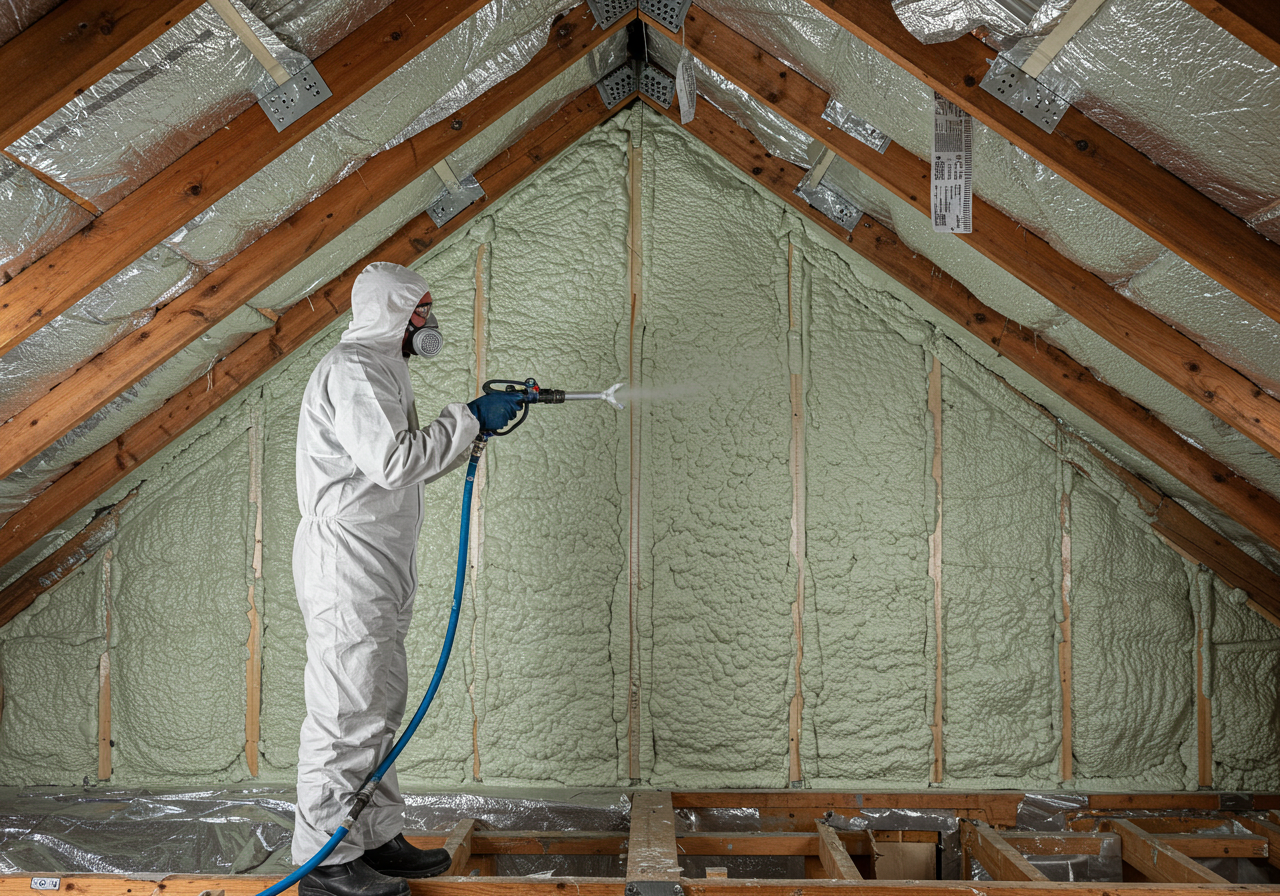
As we move through 2026, homeowners, builders, and business owners are re-evaluating traditional insulation methods in favor of more efficient, long-lasting, and sustainable options. One technology that continues to dominate the insulation conversation is spray foam insulation. But with advancements in materials, building science, and energy policy, the question remains: Is spray foam insulation still the best choice in 2026? Let’s explore.
🔍 What’s Trending in Insulation for 2026?
Before answering the big question, it’s worth noting some key developments shaping the insulation landscape:
🏡 1. Climate-Driven Performance Standards
Modern building codes are increasingly focused on thermal performance and air sealing. Governments and industry bodies, like Natural Resources Canada, have updated their energy efficiency recommendations to push building envelopes further than ever before.
🔗 Learn more at Natural Resources Canada – Energy Efficiency: https://www.nrcan.gc.ca/energy-efficiency
🌱 2. Sustainability and Low-Carbon Materials
Carbon footprints matter. Insulation choices now carry environmental weight, with many property owners seeking materials with lower global warming potential (GWP) and better life-cycle performance.
📊 3. Measurement and Accountability
Tools like blower door tests, thermal imaging, and energy modeling are now commonplace, helping contractors and clients quantify insulation effectiveness.
Against this backdrop, spray foam remains a major contender—but is it still the best choice? Let’s dig deeper.
🧠 What Makes Spray Foam Insulation Stand Out?
Spray foam insulation has unique properties that make it especially relevant in 2026:
🚪 1. Superior Air Sealing
Spray foam expands to fill cracks and voids, creating a continuous air barrier—something traditional insulation can’t do effectively. According to the U.S. Department of Energy, air leakage can account for up to 30% of energy loss in buildings.
🔗 Learn more at Energy.gov – Insulation: https://www.energy.gov/energysaver/weatherize/insulation
🧱 2. High R-Value per Inch
Spray foam provides among the highest R-values of any insulation type. In 2026, with building codes pushing for greater thermal resistance, the high R-value per inch of closed-cell spray foam (R-6 to R-7+) remains a huge benefit.
💪 3. Moisture & Vapor Resistance
Closed-cell spray foam acts as both an insulation and a vapor barrier. This dual functionality helps prevent condensation, mold growth, and structural decay—issues that are only more pressing as climate patterns shift.
📉 4. Long-Term Durability
Spray foam doesn’t settle, sag, or lose efficiency over time like batt or blown-in insulation. Many installations from the 2010s are still performing at peak efficiency, making spray foam an investment that pays dividends for decades.
🏡 Residential Benefits: Why Homeowners Still Choose Spray Foam
🔥 1. Year-Round Comfort
Spray foam delivers exceptional thermal and air sealing performance in both winter and summer. This is especially important in regions with extreme temperature swings—like parts of Ontario, where long, cold winters are followed by hot, humid summers.
📉 2. Lower Utility Bills
By reducing heat loss and air infiltration, spray foam can significantly lower heating and cooling costs—a major selling point as energy prices continue to fluctuate in 2026.
🚪 3. Improved Indoor Air Quality
Spray foam blocks allergens, dust, and outdoor pollutants, which helps maintain healthier indoor air—a strong consideration for families concerned about asthma and allergies.
🏡 4. Retrofit Friendly
In older homes with uneven insulation or inherited performance issues, spray foam can be added with minimal disruption and maximum effect.
🏢 Commercial & Industrial Advantages in 2026
📦 1. Consistent Climate Control
For commercial spaces like offices, retail, and warehouses, spray foam helps maintain consistent temperatures, improving comfort and reducing HVAC load.
🏭 2. Moisture Control in Industrial Settings
Industrial facilities—especially those storing sensitive materials—benefit from spray foam’s moisture resistance and thermal stability.
🔧 3. Reduced Maintenance Costs
Buildings insulated with spray foam often experience fewer moisture-related structural problems, saving money on long-term maintenance.
🔒 4. Enhanced Structural Integrity
Closed-cell spray foam adds rigidity to building envelopes, which can enhance resistance to weather stresses—a plus in areas prone to storms or shifting seasonal conditions.
🌍 Sustainability & Environmental Considerations
In 2026, sustainability isn’t just a buzzword—it’s a requirement.
🌿 1. Reduced Carbon Footprint
Spray foam’s long lifespan and ability to significantly reduce energy consumption align with carbon reduction goals. Reducing HVAC runtime directly translates to lower fossil fuel and electricity use.
📊 2. Rebates & Incentives
Many jurisdictions now offer rebates or incentives for high-performance insulation upgrades. Programs like the Canada Greener Homes Grant encourage homeowners to choose advanced insulation like spray foam.
🔗 Find details at Canada Greener Homes: https://www.nrcan.gc.ca/energy-efficiency/homes/canada-greener-homes-initiative/23876
🧬 3. Low-VOC, Next-Generation Foams
New spray foam formulations in 2026 focus on lower VOC content and improved environmental profiles—addressing earlier concerns about chemicals and indoor air during installation.
🤔 Are There Situations Where Spray Foam Isn’t Best?
While spray foam insulation is a strong choice for many scenarios, it’s not always the perfect fit for every project. For example:
📊 1. Budget Constraints
Spray foam typically costs more upfront than traditional insulation like fiberglass. If budget is the primary concern, other materials may be considered—though they may not deliver the same long-term savings.
🏗️ 2. Small, Low-Use Spaces
Areas that are rarely used or don’t significantly impact energy use might not justify the cost of spray foam. In such cases, a hybrid insulation approach can be effective.
🧠 3. Precise Application Required
Spray foam must be installed by trained professionals to perform correctly. Improper application can lead to performance issues, emphasizing the need for certified installers.
🔍 Comparing Spray Foam to Other Insulation Options in 2026
Here’s a short comparison of spray foam against other common insulation types:
| Feature | Spray Foam | Fiberglass Batts | Cellulose | Rigid Board |
|---|---|---|---|---|
| R-Value per Inch | ⭐⭐⭐⭐⭐ | ⭐⭐ | ⭐⭐⭐ | ⭐⭐⭐⭐ |
| Air Sealing | ⭐⭐⭐⭐⭐ | ❌ | ❌ | ⚠ |
| Moisture Resistance | ⭐⭐⭐⭐ | ❌ | ⚠ | ⚠ |
| Longevity | ⭐⭐⭐⭐⭐ | ⭐⭐ | ⭐⭐ | ⭐⭐⭐ |
| Installation Complexity | ⚠ | 😊 | 😊 | ⚠ |
| Best for Retrofits | ⭐⭐⭐⭐⭐ | ⚠ | ⭐⭐ | ⭐⭐ |
Spray foam stands apart for efficiency, air sealing, and longevity.
🏡 2026 Building Code & Energy Efficiency
Building codes continue to evolve with an emphasis on energy performance. Spray foam helps properties meet or exceed these tighter standards by providing continuous insulation and air sealing—two major building envelope criteria in modern codes like the National Building Code of Canada and regional standards.
External resources to explore:
- National Building Code of Canada (NBC) – https://nrc-cnrc.gc.ca/eng/solutions/collaborations/ongoing/nbc.html
- Energy Efficiency Requirements – https://www.nrcan.gc.ca/energy-efficiency
💡 Final Verdict: Is Spray Foam Insulation the Best Choice in 2026?
Yes—for most applications, spray foam insulation remains one of the best choices available in 2026. It delivers:
✔ Unmatched thermal performance
✔ Superior air sealing and moisture control
✔ Long-term energy savings
✔ Longevity and low maintenance
✔ Sustainability benefits and rebate potential
✔ Strong performance across residential, commercial, and industrial buildings
While upfront costs are higher than some traditional options, the long-term ROI—through energy savings, improved comfort, and reduced maintenance—makes spray foam a strategic and future-proof choice for property owners nationwide.
📞 Ready to Upgrade Your Insulation in 2026?
If you’re considering insulation improvements for a home, business, or industrial facility in Barrie, Simcoe County, Muskoka, Grey Bruce, York Region, or the Greater Toronto Area, we can help you explore whether spray foam is the right choice.
👉 Contact us for a free consultation and personalized energy assessment.